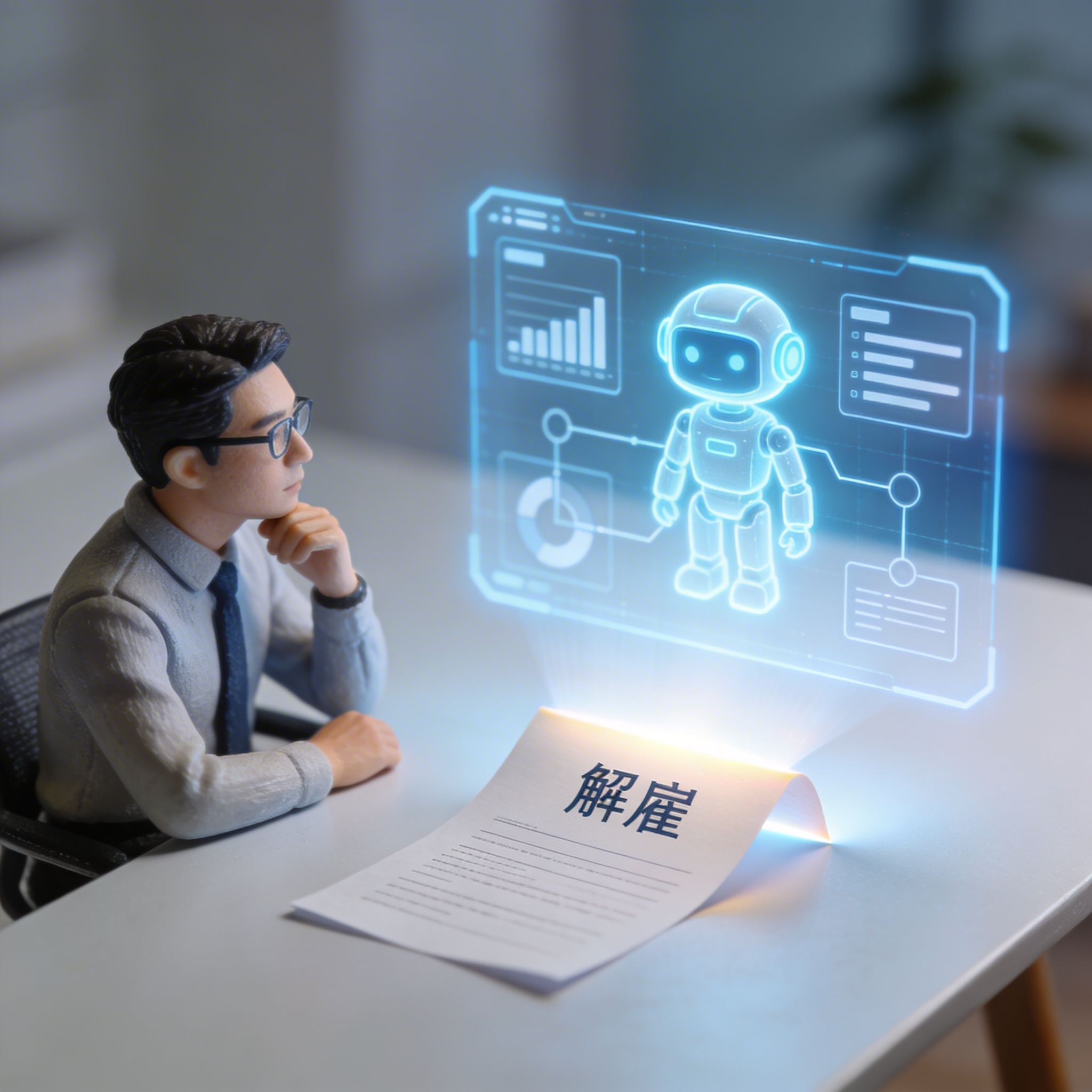
- Have You Ever Felt That “Dismissal Regulations Are Too Strict”?
- The “Dismissal Regulation” Debate in the News
- The “Talent Mismatch” Challenge Our Client Faced
- New Insight: Try AI Agents Before You Hire
- System Explanation: The Perspective of “Exemption” from Employment Regulations
- To Be Free from the “We Can’t Fire Anyone” Dilemma
Have You Ever Felt That “Dismissal Regulations Are Too Strict”?
Hello. This is Goto from the Governance Media team.
The other day, I spoke with a business owner who was facing a serious dilemma.
“There’s an employee who just doesn’t fit the company. But Japan’s dismissal regulations are strict. I can’t easily let them go.”
This is a concern I hear from many small and medium-sized enterprise (SME) owners. They want to comply with the law. But they also need to protect their business. They feel caught in the middle.
This time, let’s consider one practical solution to this difficult problem.
The “Dismissal Regulation” Debate in the News
Lately, news about “reconsidering Japan’s dismissal regulations” has been a hot topic. How should the future labor market look? A major debate has begun.
However, legal reforms take time. They won’t change overnight. We business owners must face the challenges in front of us “now.”
Before resorting to the last resort of “dismissal,” there must be something we can do.
The “Talent Mismatch” Challenge Our Client Faced
One of our clients faced a similar challenge. A hired employee wasn’t performing as expected. Yet, the legal hurdles were high.
As a result, productivity dropped, and team morale was affected. This is a significant business risk.
Where are the roots of this problem? I believe one lies in the stage “before hiring.”
“Do We Really Need a ‘Person’ for This Task?”
This question is the starting point. We tend to think, “Let’s hire someone” when a task exists. But times have changed.
What we should seriously consider now is utilizing “AI Agents.” This isn’t just about efficiency. From a governance and risk management perspective, it’s an extremely important choice.
New Insight: Try AI Agents Before You Hire
Let me share our own experience. Previously, we needed manpower for accounting and customer service. But first, we tested how much could be done with AI agents.
The results were surprising. Data entry, initial response to inquiries, preparation for document creation—many routine tasks were sufficiently handled by AI.
Of course, not everything can be completed by AI. However, a model where “AI handles 80%, and humans judge the remaining 20%” is possible.
Entrusting this “80%” to AI creates significant benefits.
Three Benefits of Utilizing AI Agents
- 1. Reduction of Human Resource Risk
“Hiring a person” comes with complex legal risks. Employment regulations do not apply to AI agents. - 2. Scalability
AI can flexibly respond to increases or decreases in workload. Difficult adjustments like hiring only for busy seasons become unnecessary. - 3. Cost Optimization
Not only labor costs but also recruitment and training costs can be significantly reduced. While initial investment is needed, it is advantageous in the long term.
System Explanation: The Perspective of “Exemption” from Employment Regulations
Japanese labor laws are very strict to protect workers. Dismissal regulations are a prime example. This is, of course, important.
However, from a business owner’s perspective, it’s time to also consider the option of “not creating an employment relationship in the first place.”
AI agents are not “workers.” Therefore, they are outside the scope of the Labor Standards Act and the Employment Contract Act. This is not merely a technology adoption but strategic risk design.
A shift in mindset is required: from “hiring because we lack manpower” to “humans do what AI cannot.”
How to Start: Three Concrete Steps
- Step 1: Identify Tasks with “AI Potential”
First, list all internal tasks. Look for tasks with clear rules and standardization. Accounting processes, data aggregation, and email replies are examples. - Step 2: Start Small
Instead of entrusting a major task immediately, start with a small part. For example, try transferring invoice data into a system. This lets you experience AI’s capabilities. - Step 3: Shift Human Roles to “Judgment Tasks”
If AI handles routine tasks, people can focus on more creative and high-level judgment tasks. This leads to a true enhancement of human resource value.
To Be Free from the “We Can’t Fire Anyone” Dilemma
The dilemma of “we can’t fire anyone” is a problem that fundamentally “wouldn’t occur if you didn’t hire” in the first place. Of course, not all tasks can be automated. Excellent talent is a company’s treasure.
However, before immediately assigning a person to every task, please pause and think once.
“Is this task really something only a human can do?”
This question becomes very important when considering governance for SMEs moving forward. Designing ahead of risks. Isn’t that the role of the modern business owner?
AI agents are not just tools. In an environment of strict employment regulations, they are “strategic partners” to protect and grow your business.
Why not take the first step?
Author: Hotaka Goto
IntelligentBeast LLC. / Good Light Inc.
We share daily insights on governance and technology adoption tailored to the practical needs of SMEs.


Comments