What’s Happening at Honda?
According to a report by Toyo Keizai Online, Honda has incurred massive losses, leading a prominent former executive to recommend the resignation of President Toshihiro Mibe. Behind the scenes, governance reforms are reportedly underway, with a candidate in their 40s emerging as a potential successor.
You might think this is a big-company story that doesn’t apply to your SME. But reading this article, I felt strongly that “SMEs, more than anyone, should learn from this case.”
Why? Because the structural issues at Honda are essentially the same as governance failures in SMEs. There’s no mechanism to challenge the CEO’s decisions. Problems are swept under the rug due to past achievements. And by the time action is taken, it’s often too late.
In this article, we’ll use the Honda case as a springboard to outline concrete actions SME owners can take to review their own governance.
The Core of Governance Failure: A Lack of Dissent
The key point in the Honda case is that the call for resignation came from an influential former executive—an “outsider.” Ideally, the internal board of directors or auditors should have analyzed the reasons for the poor performance and demanded improvements from management.
But they couldn’t. Why?
President Mibe, while not from Honda’s founding family, is a charismatic leader who has steered the company for years. In the face of such charisma, it’s extremely difficult for internal staff to raise their hands and say, “The president’s business judgment is wrong.”
This is exactly the same in SMEs. Founders or long-serving presidents tend to become “absolute authorities” within the company. This leads to problems like:
- Accelerated one-man management
- Employees becoming afraid to speak up
- Risks remaining invisible until problems escalate
- Delays in successor development
The fact that even a giant like Honda couldn’t foster internal dissent is a wake-up call for SME owners: “This could happen to me, too.”
No System to Check the President’s Decisions
In many SMEs, the board of directors is a mere formality. Board members are often the president’s relatives or long-time subordinates who never reject the president’s proposals. Auditors are also just for show, failing to perform any real oversight.
Many owners think, “Our company is too small for such systems.” But that’s precisely why it’s dangerous. The smaller the company, the more a single misjudgment can threaten its very survival.
Three Actions SMEs Should Take Right Now
So, what should SME owners learn from the Honda case, and how should they act? Based on my experience supporting over 38 clients, here are three practical steps you can implement immediately.
1. Bring in an Outside Perspective
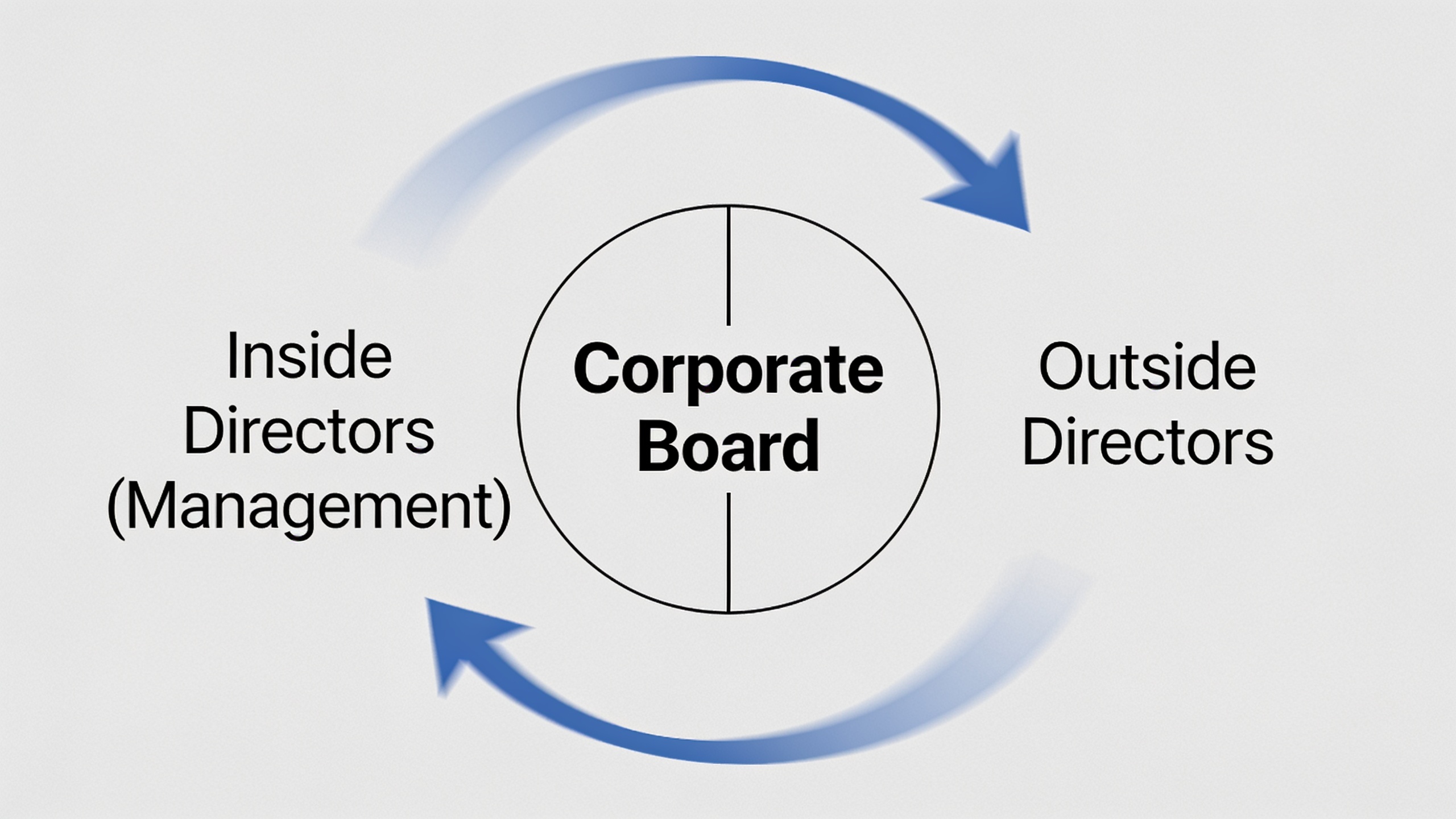
The most effective measure is to introduce outside directors or advisors. External people are free from internal politics and deference. They can objectively challenge the president’s decisions.
I often hear, “We don’t need an outside director.” But the purpose isn’t just oversight. It’s to create a trigger for the president to ask themselves, “Is my judgment correct?”
Consider these types of people:
- Executives from non-competing companies in the same industry
- Professionals (lawyers, CPAs, tax accountants)
- Retired bankers or financial institution executives
- Individuals with experience as officers in operating companies
Start with an advisory contract a few times a year. The key is to create an environment where someone can say “no” to the president.
2. Publish Meeting Minutes
The second step is to share minutes from management meetings with all managers and above. The minutes should clearly record who proposed what, what discussions took place, and who made the final decision.
This system has several benefits:
- Makes the decision-making process transparent
- Allows for later review of the decision’s validity
- Helps employees understand “who decided what”
- Clarifies accountability
If you think “I don’t have time to take minutes,” use an AI transcription tool. High-accuracy tools are available for just a few thousand yen a month. Don’t let minutes become a mere formality; use them as a tool to improve the quality of management decisions.
3. Pre-Define Conditions for the President’s Resignation
The third step is the most important and the most difficult. It requires the president to pre-define the conditions under which they should step down.
In the Honda case, massive losses triggered the call for the president’s resignation. But in many SMEs, even with continued losses, the option of “the president resigning” is never even discussed.
I recommend setting rules like these in advance:
- If the company posts losses for two consecutive fiscal years, the president will consider resigning.
- If the equity ratio falls below XX%, the board will discuss a leadership change.
- If sales in the core business decline year-on-year for three consecutive years, the president will nominate a successor candidate.
It’s effective to include these rules in the company’s articles of incorporation or a shareholders’ agreement. It may feel like you’re tying a noose around your own neck, but this rule is the “last line of defense” for your company.
Only the President Can Stop Their Own Runaway Leadership
The Honda case teaches us that even the most brilliant leader can endanger the company with self-centered decisions. And it confronts us with the harsh reality that only the president themselves can stop that runaway train.
Bringing in outside perspectives, making decisions transparent, and pre-defining resignation conditions. These measures might seem like they’re limiting the president’s power. But their true purpose isn’t to restrict authority; it’s to ensure the company’s sustainable growth.
SME owners must recognize the danger of becoming an “absolute authority” and build mechanisms to apply their own brakes. This, in turn, strengthens the company and protects the president themselves.
In your company, is there someone who can say “no” to the president? Take a fresh look at your governance today.
Comments