Decision-making & Organization / Organization & Leadership
It Is Time to Admit AI Outperforms Most People: Why the President Should Try a Top-Tier Model First
2026-11-02
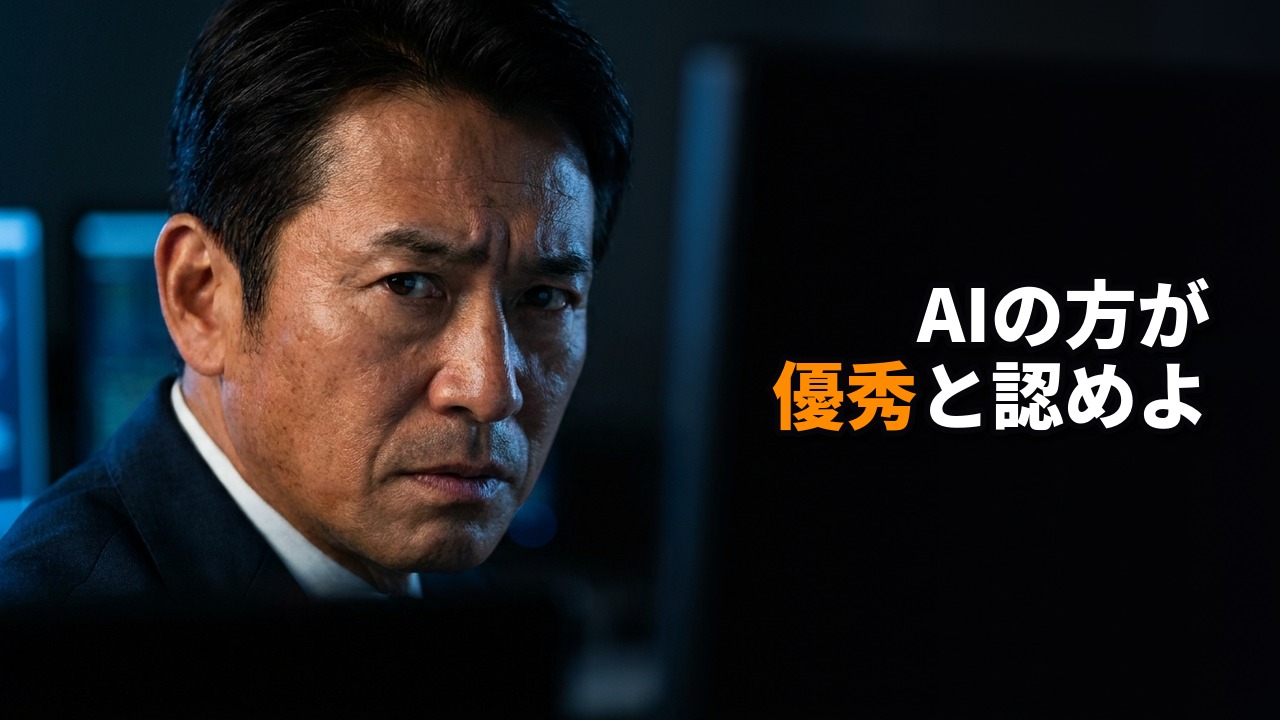
More companies use AI now, but many still treat it as less than human: AI writes a draft and a person redoes all of it, AI gets only leftover chores, and one mistake is taken as proof that "AI does not work." I think this is a mistake.
The short version: some areas clearly need people, namely hospitality. Outside of that, AI is now often better. So welcome AI as an insider, hand it work rather than tasks, and before deciding anything, have the president personally try a top-tier model to see what today's AI can do. We have reached the point where we must admit that AI is more capable than most people.
What "less than human" looks like
We would never treat a new hire this way. When a new employee makes a mistake, we teach them and gradually widen what they handle. With AI, many companies start from distrust and lock it into the lowest tasks. If people redo every draft, effort barely drops, and the conclusion becomes "AI is useless." That is not a problem of AI's capability; it is a problem of what we hand it. Low expectations produce low results, which seem to justify the low expectations, and the company's work never changes.
Hospitality stays with people
Reading a customer's feelings, matching their mood in the moment, meeting face to face so they feel reassured: this kind of hospitality is valued precisely because people do it. But in researching, summarizing, following fixed procedures, and answering questions, today's AI is often faster, more accurate, and more consistent than people. It does not tire, it is not moody, and it works at the same quality at midnight. This is not about lowering the value of people; it is about seeing, task by task, where AI already does better.
Treating AI as an "insider"
On X, a large tech company was reported to treat AI agents working inside the company as "insiders," with guardian AI continuously watching their activity. We only see it from outside, but the direction is clear: larger companies are building on the premise that AI is a member of the organization, not an outside tool. Treating AI as an insider means doing what you would do when welcoming a person: define the role, decide what to hand over and how far it may reach, and widen its scope when it performs well. The difference is whether you hand over tasks or hand over work: "fix this text" versus "this job is yours, bring me the result."
What worked: external paperwork and internal Q&A
One success was routine paperwork with outside parties: checking documents, exchanging required information, managing deadlines. These jobs have clear procedures, so AI handles them with fewer omissions and delays. Partners see a company that replies quickly and accurately, which is a gain in how others see you, not just saved staff hours.
The other was answering internal questions based on rules, procedures, and past decisions. Questions usually pile up on the most knowledgeable person. With AI answering, the same question gets the same answer, that person returns to their real work, nobody hesitates to ask at night or on weekends, and a record of frequent questions shows where procedures are unclear.
What failed: companies with low enthusiasm
It did not work at companies with little enthusiasm for using AI to begin with. The same system ran in one company and stalled in another; the difference was the company's stance, not the system. In those companies, one AI mistake ends its use, and nobody owns handing it work, checking it, and fixing it. Changing that takes the president's leadership: saying clearly that AI will be treated as an insider, that this job is now AI's, and that when it fails we fix it rather than quit. And the president should use it personally before telling staff to.
The test: try a top-tier model first
My rule in practice: try a top-tier AI model and see what today's AI can actually do before deciding how much to hand over. Judging from an impression formed years ago or from a limited version leads to underestimating AI across every decision. AI changes substantially in months, and the cost of checking is far smaller than the cost of misjudging. Do not test with generic questions; pick a real job from this week, give the model the same materials, and compare its result side by side with the human result.
Time to admit it
Outside areas like hospitality, AI is already more capable than most people at many jobs. Keeping it beneath people while competitors hand it real work means falling behind little by little. Resistance is natural, so do not force yourself to agree; compare with your own company's work and decide afterward. This does not lower the value of people. Admitting a calculator is faster does not make anyone less valuable. What remains for people is hospitality and deciding which work to hand to AI and whether to widen or pull back its scope, and that decision weighs most on the president.
Three steps to welcome AI
- Write the role: what AI is responsible for, what it receives, and what it returns.
- Set the scope and the way back: what may go out as is, what needs a human check, and what it must not touch. Start with more checks and reduce them.
- Watch and review: in a small company, one weekly look at its work is enough to fix the role and widen the scope.
When someone says "AI makes mistakes," my answer is that people do too. Compare both on the same job with the same standard. Leave to people the work where AI errs more.
Do this today
Try the top-tier model yourself. Pick one real job from this week and compare the human and AI results. Then formally hand one job AI did better to AI. Try, compare, hand over. This is not about being polite to AI; it is about handing work over correctly.
Full video: https://www.youtube.com/watch?v=AYd8udBoVxs