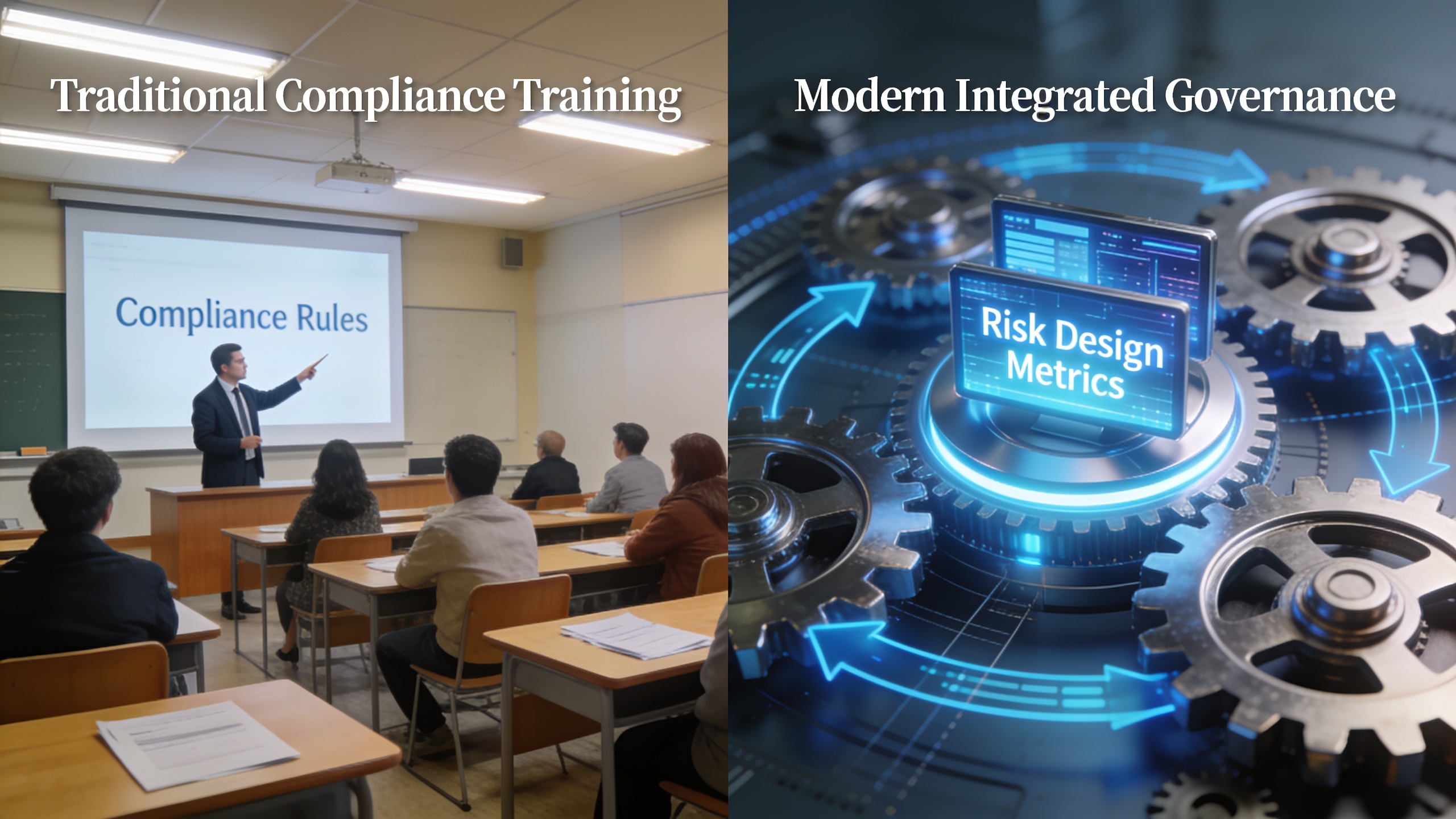
The Pitfall of “Training Completed = Countermeasure Done”
Following the end of the TV program “Ano Channel,” the content of compliance training conducted by the key station was reported. According to the article, the training focused on a list of “don’ts,” such as “definitions of harassment” and “points to note on social media.”
Small and medium-sized business owners, does this sound familiar? An annual compliance training session. Gather employees, read through materials, and have them sign an attendance form. And then you think, “Governance measures are complete.”
However, this “faith in training” is the biggest risk.
The Mechanism of Training’s “Counterproductive Effect”
Training that teaches “what not to do” has a side effect: it robs employees of their judgment.
For example, an employee who is only taught the rule, “You must not share company information on social media,” will hesitate even to share appropriate information with business partners. When asked, “Is this a gray area?” they have no basis for judgment because they only learned “bad examples.”
As a result, they avoid even necessary risks, slowing down business. This is the true nature of the “structure where compliance-focused companies decline.”
The Essence of the “Ano Channel” Problem
The essence of this problem is not simply a “compliance violation.” It’s that the mechanism to pause and think, “Is this okay?” was not functioning on the production floor.
The article mentions voices saying that “self-censorship on the floor has strengthened” after the training. In other words, the training increased the number of “things you can’t do,” but the design of “how to do things right” was left behind.
The “Blueprint for Judgment” SMEs Need
What SMEs should aim for is not “memorizing prohibitions” but having a “blueprint for judgment.”
Specifically, you need to clarify the following three things within your company.
- Business Purpose: Why are we doing this business?
- Acceptable Risk: How much failure is acceptable?
- Conditions for Judgment: Who decides, and based on what criteria?
For example, consider social media management for a new business. If the purpose is “brand awareness,” a certain level of backlash risk might be acceptable. Conversely, if the purpose is “maintaining relationships with existing customers,” a cautious approach is required.
In this way, instead of imposing a “blanket ban” through training, design judgment criteria based on the business context. This is the key to transforming governance from “defense” to “offense.”
The Misunderstanding and Truth of “Speak-Up Culture”
An article published around the same time, which dispels the misconception that “internal reporting = snitching,” has also garnered attention. This article emphasizes the importance of a “speak-up culture.”
However, aiming for a “workplace where anything can be said” in an SME is dangerous. Why? Because without a mechanism to ensure the quality of remarks, it simply becomes a “complaint session.”
Three Rules for Eliciting Constructive Remarks
Here are three methods that have proven effective in the companies I have supported.
- Rule to Report “Problem” and “Proposal” Together: Require improvement suggestions, not just complaints.
- Standardize the “Format” of Reports: Provide a template that follows the order: “Fact → Impact → Proposed Action.”
- System to Evaluate Reporters: Include employees who report problems early in the evaluation process.
This increases “thoughtful remarks” rather than “offhand comments,” improving the quality of management decisions.
Governance Design in the Age of AI
Furthermore, the news about Ajinomoto establishing an AI governance foundation offers valuable insights for SMEs. Large companies are beginning to design AI usage rules within the context of “data management.”
Even SMEs should keep the following two points in mind.
- Rules on What Can Be Input into AI: A basic rule not to input customer information or internal secrets into AI.
- Who Checks AI Output: The principle that final decisions are made by humans.
Again, instead of banning AI use with a “don’t use AI” training, sharing a “how to use it” blueprint can leverage the creativity of the workplace.
Start “Design-Based Governance” Today
Finally, here are three actions you can implement starting tomorrow.
- Review Your Compliance Training Content: Add “judgment criteria” in addition to “prohibitions.”
- Decide on One “Format” for Reports: Create a rule for all employees to report using the same format.
- Summarize AI Usage Rules on One Page: Clearly state what can be input and who checks the output.
Governance is not about “not violating rules”; it’s a “design technique for achieving business objectives.” By not ending with training and instead equipping the workplace with usable judgment criteria, SMEs can leverage their agility to achieve robust governance.
Why not take a fresh, zero-based look at your company’s “compliance training”?


Comments