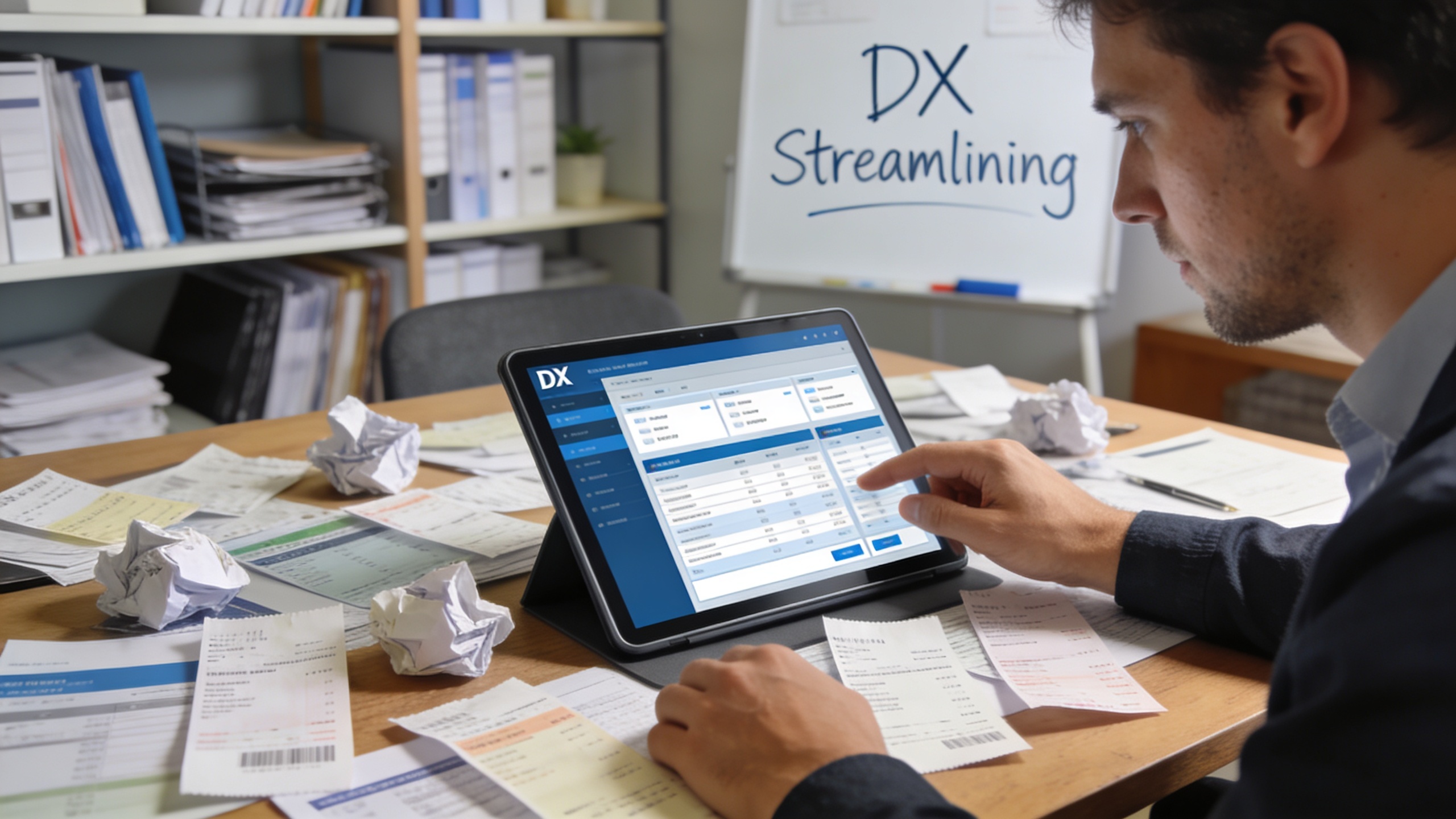
The Governance Blind Spot Revealed by Expense Fraud
If you run a small or medium-sized enterprise (SME), have you ever had this experience? “I looked at a business trip report and wondered why the amount was what it was, but I couldn’t bring myself to ask.” “We have expense reimbursement rules, but I can’t confirm if they’re being followed on the ground.”
In reality, it’s the accumulation of these “small frauds” that represents the biggest blind spot in SME governance. Unlike large corporations with internal audit departments or dedicated compliance officers, SMEs are often forced to rely on a fragile system of “trusting the employee’s declaration” for expense reimbursement.
In March 2025, the corporate business trip arrangement and management system “Pikapaka Business Trip DX” released a Single Sign-On (SSO) feature (Source: Nico Nico News). At first glance, this might seem like a simple update to a business efficiency tool, but I see in it the potential to fundamentally change governance for SMEs.
The Power of “Invisible Control” Brought by SSO
Single Sign-On (SSO) is a mechanism that allows access to multiple systems with a single authentication. In the case of Pikapaka Business Trip DX, this enables the entire flow from trip application to expense reimbursement to be executed under consistent authority management.
Why does this lead to stronger governance? The key point is that “who operated what, when, and with what authority” is completely recorded.
In traditional SMEs, the expense reimbursement system and the business trip management system are often separate. As a result, situations like “Employee A applied for the trip, but Employee B handled the actual expense reimbursement” can easily occur. Even without malicious intent, this creates information asymmetry and becomes a breeding ground for fraud.
If system integration is strengthened through SSO, it can automatically check whether the trip applicant and the expense reimburser are the same person. This is precisely the “automation of internal controls.”
The “Systematization” Perspective SMEs Need Most
Many of the SMEs I have supported believe, “Our company has few employees, so expense fraud won’t happen.” However, reality is different. The fewer employees a company has, the wider the scope of duties each employee handles, making it harder for checks and balances to function.
For example, it’s not uncommon for a company with 10 employees to have only one accounting staff member. If that accounting staff member processes their own business trip expenses, who checks it? It’s unrealistic for the president to verify everything.
What’s important here is not “monitoring by people” but “control through systems.” A system like Pikapaka Business Trip DX provides exactly that mechanism. By incorporating “automatic authority checks” into the expense reimbursement process through the SSO feature, the probability of fraud occurring drops significantly.
Transforming Governance from a “Cost” to an “Investment”
Many SME managers tend to view strengthening governance as a “cost.” Certainly, introducing an internal control system requires an initial investment. However, considering the losses caused by expense fraud, this is more of an “investment.”
In one manufacturing client with 50 employees, approximately 3 million yen (approx. $20,000 USD) in expense fraud was discovered annually. The cause was duplicate trip reports and fictitious receipts. The company subsequently introduced a trip management system and automated the expense reimbursement process. One year after implementation, fraud dropped to zero, and the system implementation cost was recovered within six months.
This case demonstrates that strengthening governance is not a “defensive expense” but an “offensive investment.”
3 Actions to Start Right Now
Before considering introducing a system like Pikapaka Business Trip DX, please first implement the following three steps.
1. Visualize your current expense reimbursement flow
Who applies for expenses, using what procedure, and who approves them? Creating a flowchart can reveal unexpected loopholes.
2. Enforce the “Applicant = Reimburser” principle
Even without a system, establish a rule that “the person who applied for the business trip also handles the expense reimbursement.” If exceptions are allowed, create a mechanism that requires approval from a supervisor.
3. Consider introducing a system, starting small
Rather than a large-scale ERP system, it’s more realistic to start with a SaaS tool specialized in trip management or expense reimbursement. Cloud-based systems like Pikapaka Business Trip DX have low initial costs and are easy for SMEs to adopt.
Summary: The Era of Solving Governance with “Systems”
The revised draft of the Corporate Governance Code also calls for improving the effectiveness of internal controls (Source: PwC). However, it’s unrealistic to expect SMEs to achieve the same level of internal controls as large corporations.
That’s precisely why we should leverage technology to advance “systematization.” Features like SSO may seem unremarkable at first glance, but they are powerful tools that support the very foundation of governance.
Expense fraud doesn’t just lead to financial loss. It damages internal trust and lowers employee morale. Before that happens, prevent it with systems. This is the perspective required of SME managers going forward.
Is your company’s expense reimbursement process truly safe? Why not take a moment to review it?


Comments